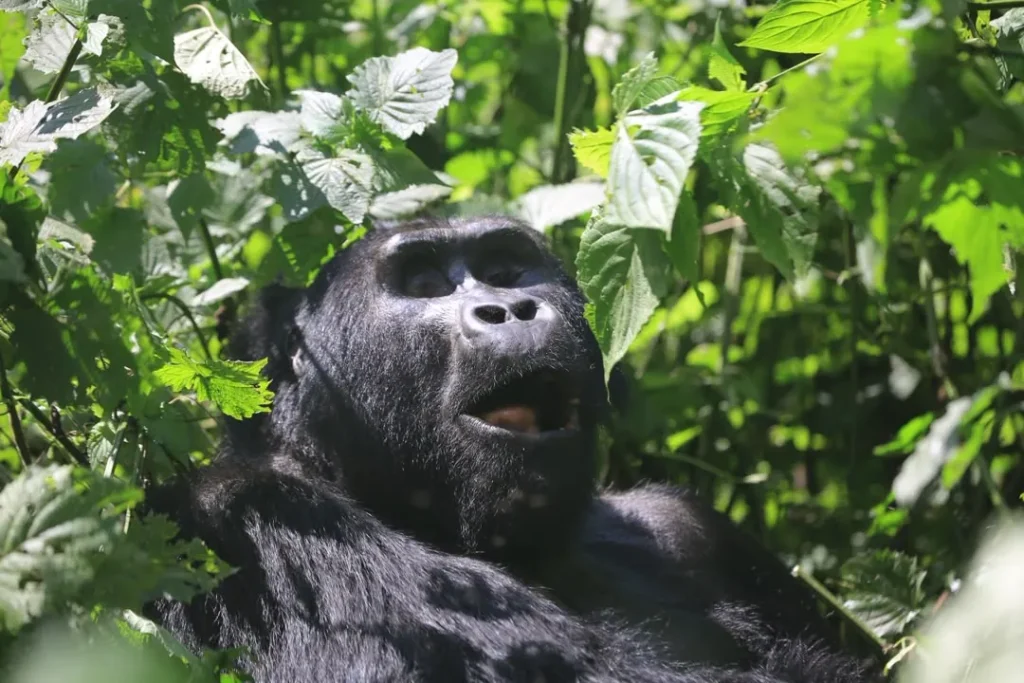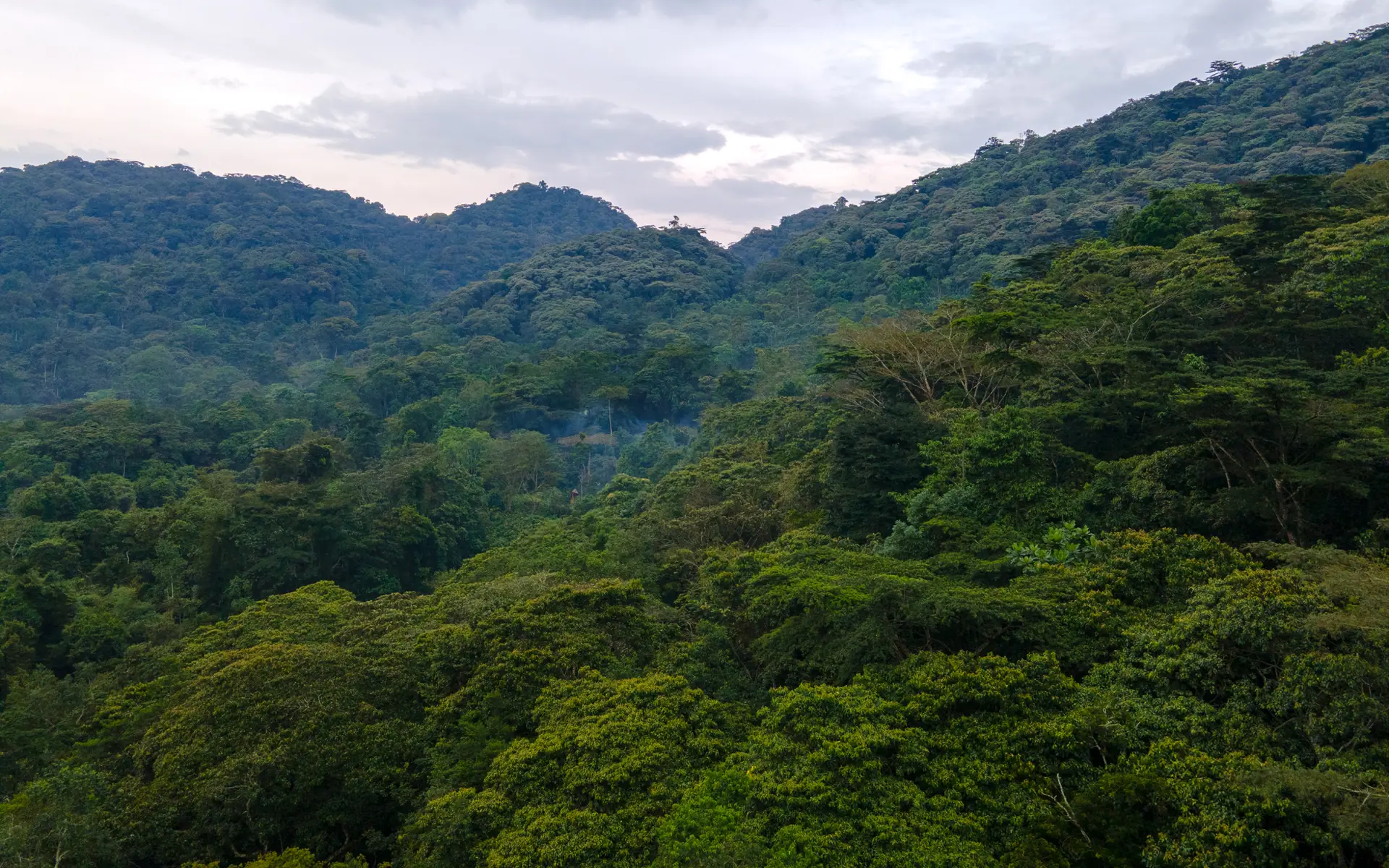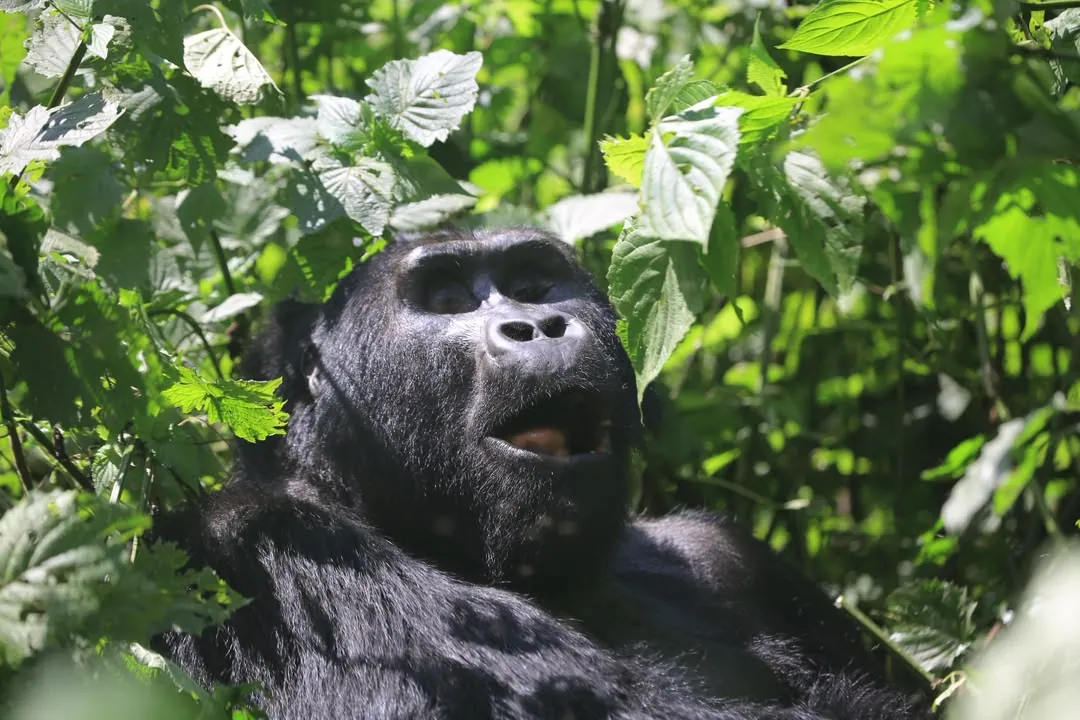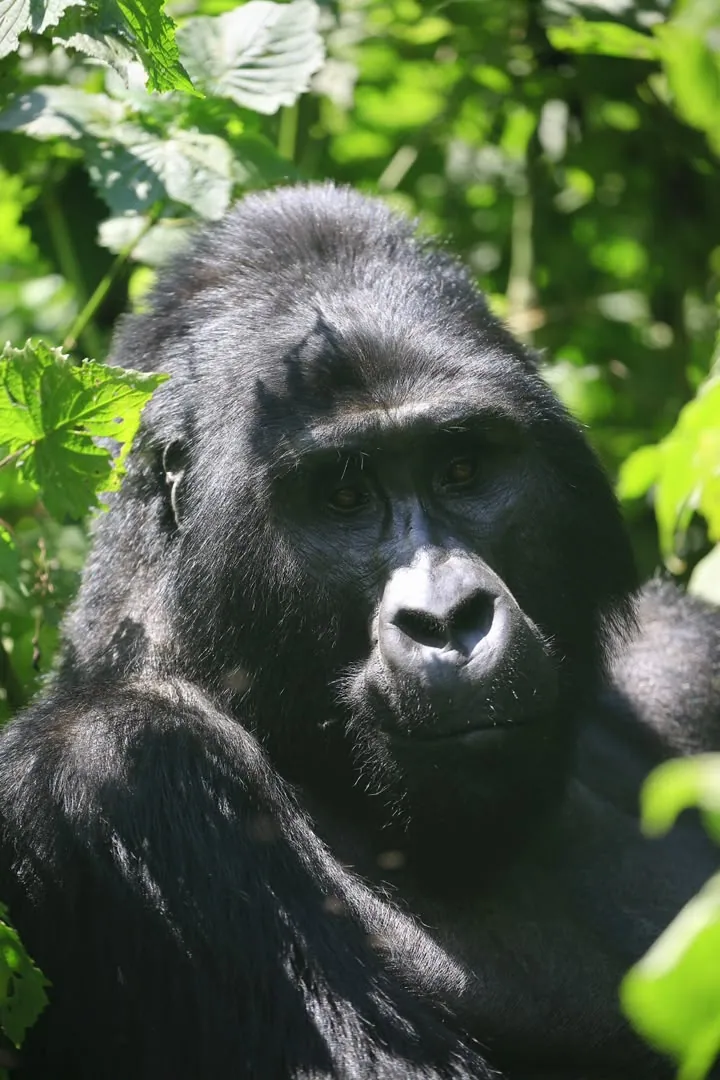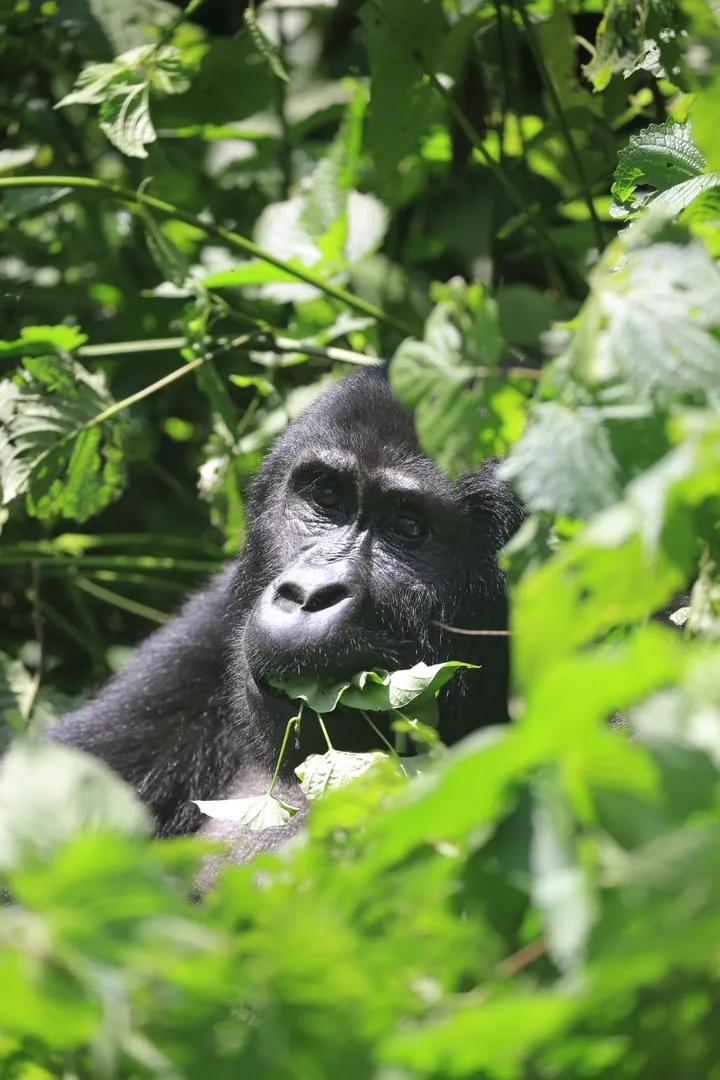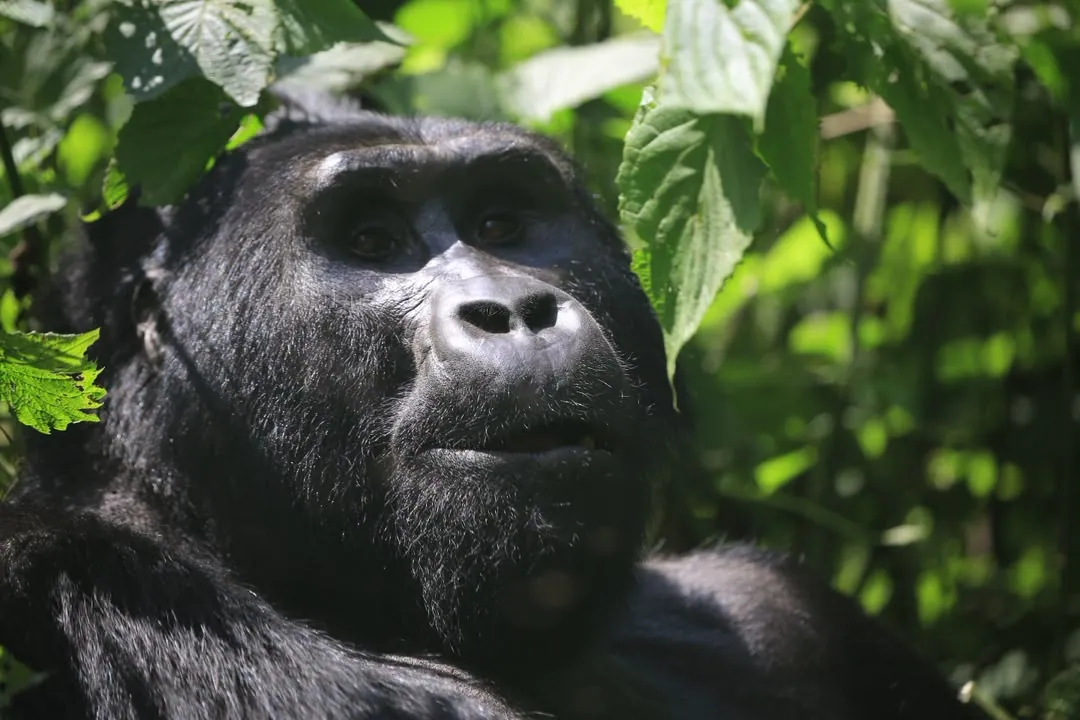

Bwindi is an ancient montane rainforest on the edge of the Albertine Rift, so steep and tangled that its name comes from a local word for impenetrable. It shelters almost half of the world's mountain gorillas, and walking into the forest to find a habituated family is the reason most people come to Uganda.
The park is divided into four trekking sectors: Buhoma in the north, Ruhija in the east, and Rushaga and Nkuringo in the south. Each has its own gorilla families, trails and character, and they are several hours' drive apart, so choosing the right one matters. We match the sector to your fitness, your onward route and where your lodge sits.
Treks can take anything from an hour to most of a day, through ferns, vines and fig trees, with a guide and trackers who know the families individually. The hour you then spend with the gorillas is hard to describe and easy to remember.
Mountain gorillas are the headline, and Bwindi’s families are habituated to a small daily group of visitors. The forest also holds chimpanzees (not tracked here), L’Hoest’s monkeys, black-and-white colobus, red-tailed monkeys and a small population of forest elephants that you are unlikely to see but may hear.
For birders, Bwindi is one of the richest forests in Africa, with around 350 species recorded, including many Albertine Rift endemics. Ruhija is the base for the walk down to Mubwindi Swamp, where lucky birders find the African green broadbill.
Chance of seeing
Our estimate for a stay of two or three nights with a good guide. Wildlife is wild, so nothing is promised.
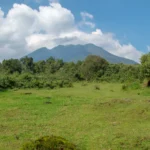
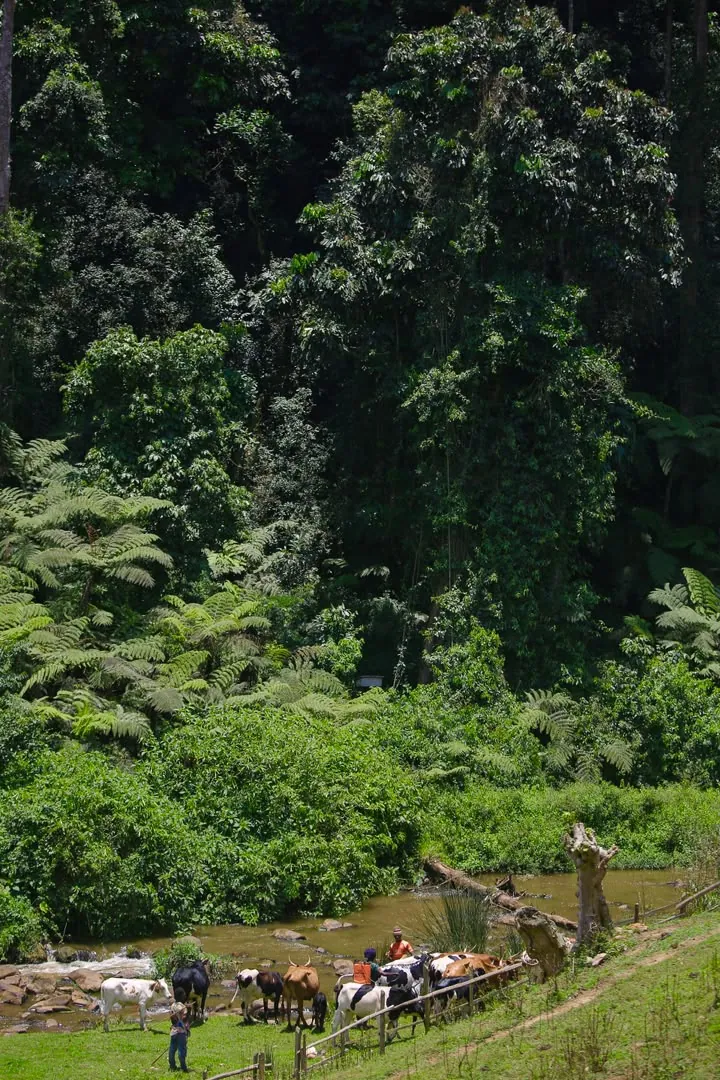
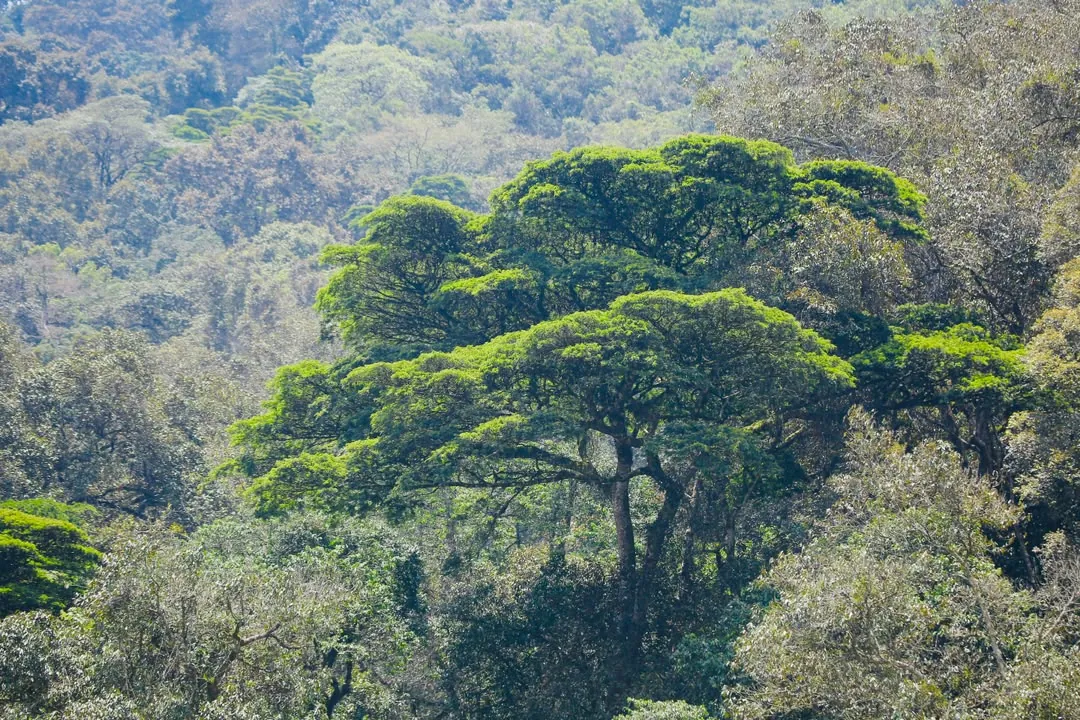
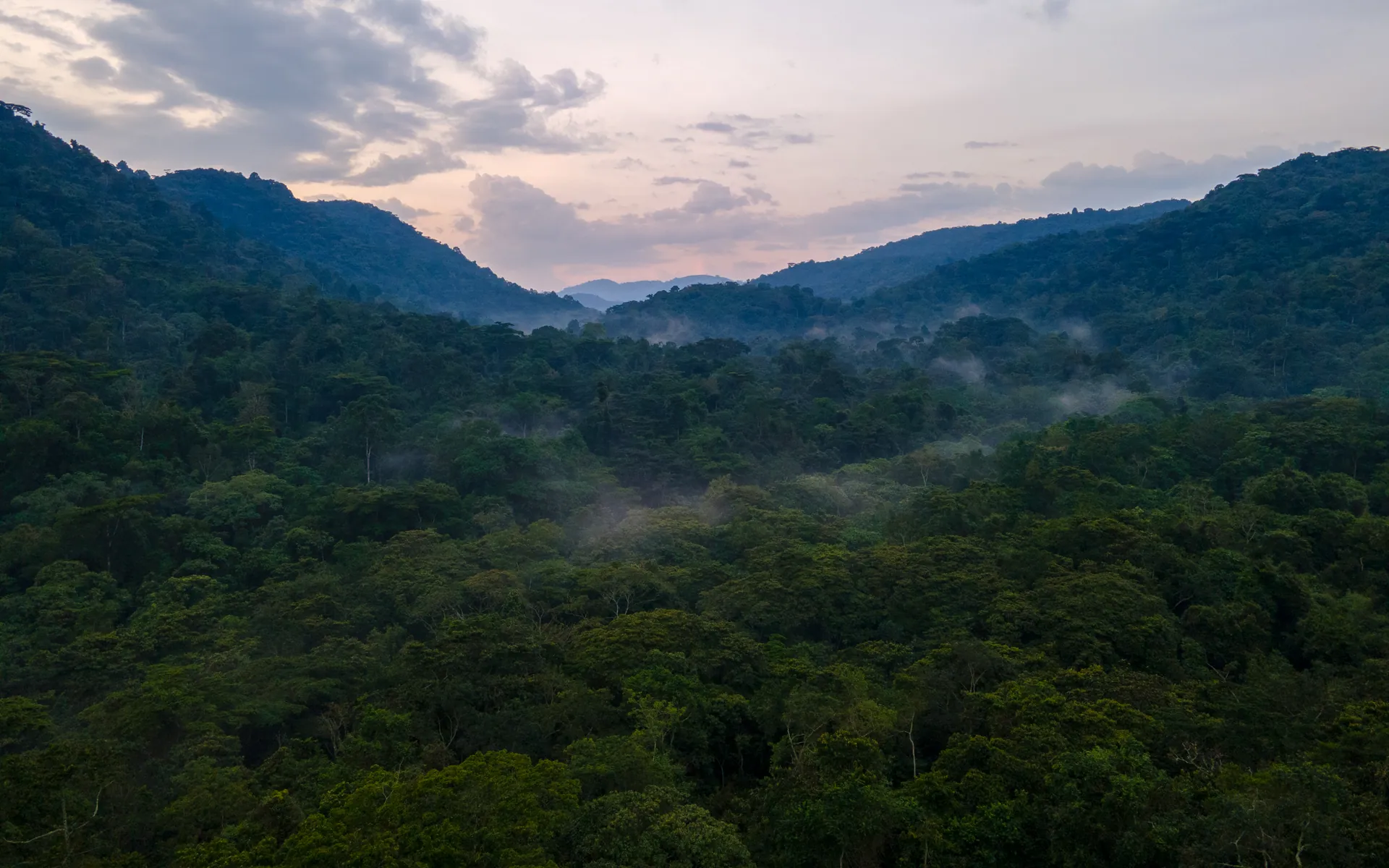
Bwindi is a landscape of steep ridges and deep valleys cloaked in dark green forest, often wrapped in morning mist that lifts as the day warms. From the southern sectors you look across terraced hillsides towards the Virunga volcanoes on the Rwanda and Congo borders. Inside the forest the light is dim and green, with giant tree ferns, strangler figs and streams running over mossy stones.
Activities here
Bwindi’s altitude keeps it cool: days are usually around 20°C to 23°C and nights can drop to 10°C, colder in Ruhija, which sits higher. This is rainforest, so rain is possible on any day of the year. The heaviest rains fall from March to May and in October and November, when trails become very slippery.
| Month | Day °C | Night °C | Rain mm |
|---|---|---|---|
| Jan | 23 | 12 | 80 |
| Feb | 23 | 12 | 100 |
| Mar | 23 | 12 | 140 |
| Apr | 22 | 12 | 160 |
| May | 22 | 12 | 110 |
| Jun | 22 | 11 | 40 |
| Jul | 22 | 11 | 30 |
| Aug | 23 | 11 | 60 |
| Sep | 23 | 11 | 110 |
| Oct | 23 | 12 | 130 |
| Nov | 22 | 12 | 140 |
| Dec | 22 | 12 | 100 |
Approximate long-term averages. Higher ground is cooler, and forests can rain in any month.
June to August is the driest stretch, with December to February a shorter and slightly less reliable dry spell. Days are mild, around 20°C to 23°C, and mornings in the forest are cool and often misty, colder still in Ruhija. Trails are firmer and treks tend to be quicker, although a shower is always possible in a rainforest.
The heaviest rain falls from March to May and from September to November. Expect downpours most afternoons, low cloud and very slippery slopes, which can make gorilla treks longer and harder. The forest is lush and quiet, and lodges have more space, but gaiters, gloves and a good rain jacket matter now.
June to September and December to February are the most comfortable months for trekking, with firmer trails and fewer downpours, and they are also when permits are hardest to find. Gorillas can be tracked all year, and the wetter months bring quieter lodges, occasional lower rates and a forest at its most lush. Our advice is to go when suits you and to book permits early.
Best time to visit Jan to Feb, Jun to Sep
By road, Bwindi is about 9 to 10 hours from Entebbe or Kampala, so we usually break the journey at Lake Mburo or combine it with Queen Elizabeth. The quicker option is a scheduled or charter flight to Kihihi airstrip for Buhoma, or Kisoro for Rushaga and Nkuringo, followed by a drive of one to two hours. From Kigali, southern Bwindi is about 4 hours by road via the Cyanika or Katuna border, which is how many of our Rwanda and Uganda combinations run.
A gorilla permit in Uganda costs US$800 per person per trek at the time of writing. Prices are set by the Uganda Wildlife Authority and do change, so we will confirm the current rate when we plan your trip. Permits are allocated to a specific sector and date, and the minimum age for gorilla trekking is 15. In peak months they sell out months ahead, so we secure yours as soon as your dates are fixed. The gorilla habituation experience is offered in Rushaga for a small number of people each day and uses a separate, higher-priced permit, so it needs even earlier booking.
Gorilla treks involve steep, uneven and often muddy terrain at around 1,500 to 2,500 metres, so a reasonable level of fitness makes the day much more enjoyable. Walking poles, gaiters, gardening gloves and waterproof layers all help, and a porter will carry your bag and steady you on the climbs. You cannot trek if you have a cold or other infectious illness, because gorillas are vulnerable to human diseases.
National ParkKibale National ParkChimpanzee tracking27 safaris
National ParkQueen Elizabeth National ParkKazinga Channel boat safari and tree-climbing lions28 safaris
National ParkMurchison Falls National ParkThe Nile forcing through a seven-metre gorge20 safaris
National ParkKidepo Valley National ParkRemote savannah wilderness9 safaris
National ParkLake Mburo National ParkWalking safaris among zebra and eland14 safaris
National ParkMgahinga Gorilla National ParkGorillas and golden monkeys on the Virunga volcanoes6 safarisOur take
“More than gorillas”
We encourage guests to give Bwindi at least three nights, so the trek is not squeezed between two long drives. On the spare day, a gentle forest walk to the waterfalls near Buhoma, a morning with a birding guide in Ruhija or a visit with the Batwa community adds real depth to the stay. We also ask for a porter for every guest: it makes the climb easier and puts a fair wage into a local household.
Safaris from
US$2,538 per person
Plan your time in Bwindi
Every safari we run is private and built around you. Tell us your dates and what you hope to see, and we will shape the route, the lodges and the permits.

Made to measure
Tell us how you like to travel and we will build a private journey around it: the right lodges, the right pace and the permits already in hand.
Start planningCookies
Essential cookies keep this site working. With your permission we also remember the safaris and places you have viewed. You can change your mind any time from Cookie settings in the footer.