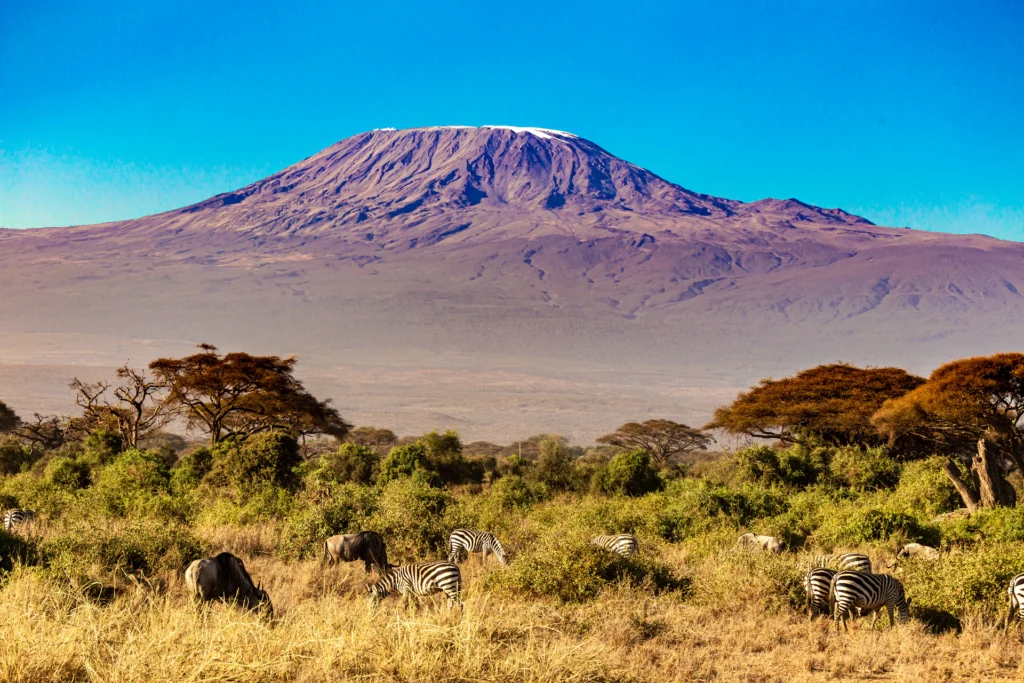
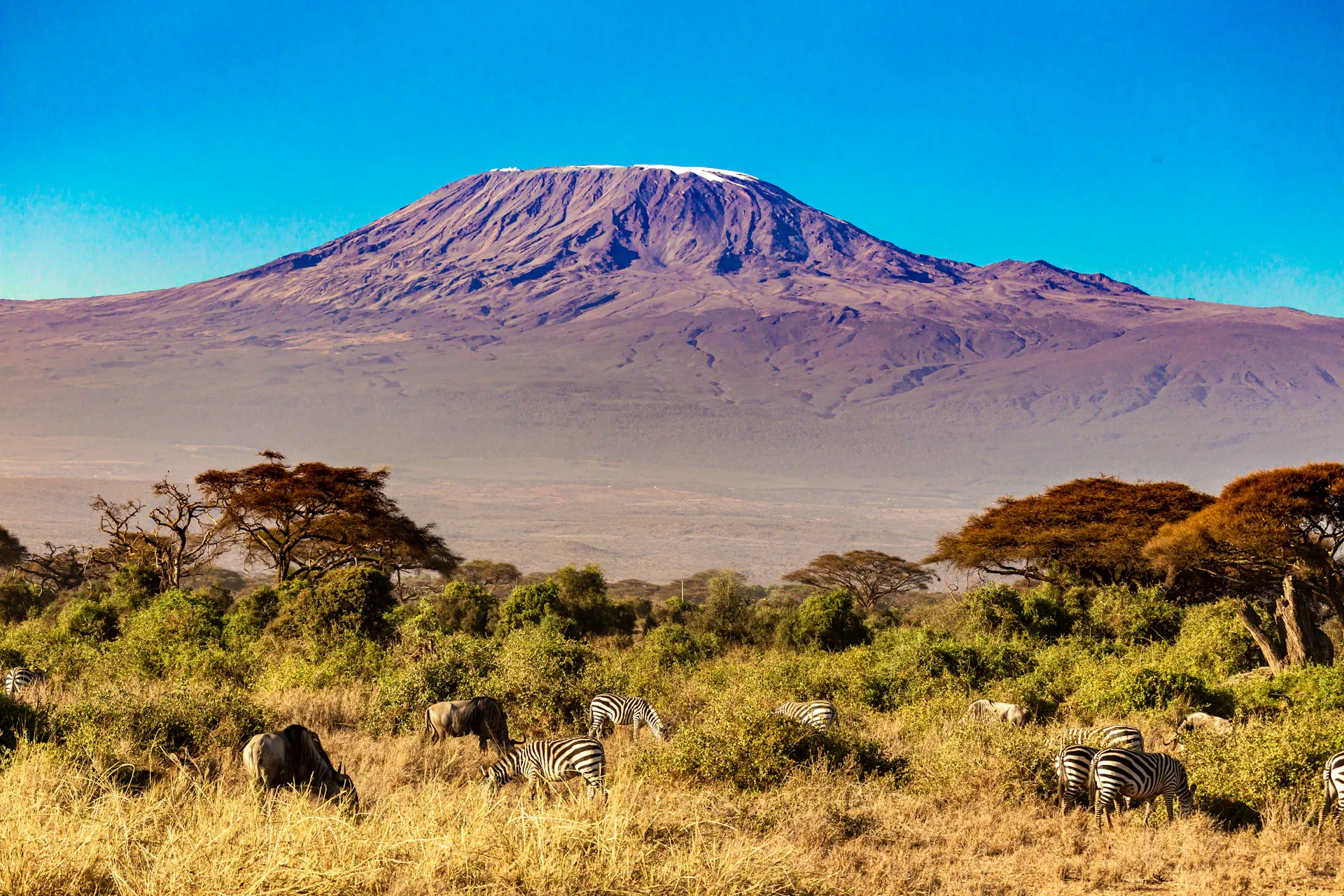
Kilimanjaro is the highest mountain in Africa and the tallest free-standing mountain in the world, rising 5,895 metres from the plains of northern Tanzania to the snowy summit of Uhuru Peak. You do not need technical climbing skills to reach the top, only fitness, good preparation and a steady pace, and the climb passes through five climate zones, from rainforest to moorland, alpine desert and an arctic summit.
Several routes lead to the top. Lemosho and Machame are the most popular, with excellent scenery and good acclimatisation, Rongai approaches from the north and is drier, Marangu is the only route with huts, and the Northern Circuit is the longest and has the highest success rate. Most treks last six to nine days, and a longer climb gives you a better chance of reaching the summit.
We work with experienced mountain teams, with certified guides, porters and well-equipped camps, and we pair the climb with a safari or a stay on Zanzibar.
The rainforest on the lower slopes shelters blue monkeys, black-and-white colobus, bushbuck, duikers and, rarely, elephants and leopards. The higher moorland and alpine zones have fewer animals, with the white-necked raven, alpine chat and the occasional eland or buffalo. The summit itself is a quiet, high-altitude desert.
Chance of seeing
Our estimate for a stay of two or three nights with a good guide. Wildlife is wild, so nothing is promised.
The mountain rises out of the farmland as a huge, snow-crowned dome. The route passes through montane forest, giant heather, lobelia and groundsel, then lava rock and glacier at the top. Sunrise from the summit is the highlight, with the curve of the earth visible on a clear day.
Activities here
Kilimanjaro has five climatic zones. The park gates and the forest are warm and wet, the moorland is cooler, and the summit is bitterly cold, with night temperatures between minus 10°C and minus 20°C. Clear mornings and clouded afternoons are normal at altitude.
| Month | Day °C | Night °C | Rain mm |
|---|---|---|---|
| Jan | 22 | 12 | 70 |
| Feb | 23 | 12 | 80 |
| Mar | 22 | 13 | 160 |
| Apr | 20 | 13 | 380 |
| May | 19 | 12 | 320 |
| Jun | 18 | 10 | 60 |
| Jul | 17 | 9 | 30 |
| Aug | 18 | 9 | 30 |
| Sep | 20 | 10 | 40 |
| Oct | 21 | 11 | 60 |
| Nov | 21 | 12 | 150 |
| Dec | 21 | 12 | 100 |
Approximate long-term averages. Higher ground is cooler, and forests can rain in any month.
January to March and June to October are the driest and clearest months. Skies are bright in the early morning, and the nights are cold, so a warm sleeping bag is essential.
The long rains from April to May bring thick cloud, heavy rain on the lower slopes and snow near the top, and the trails are slippery. The short rains in November are lighter but still wet.
January to March and June to October are the best months for a climb. The most crowded periods are July to September and the Christmas and New Year period. Avoid April, May and November if you want the most reliable weather.
Best time to visit Jan to Feb, Jul to Sep
The park gates are about an hour from Moshi, and Moshi is about 45 minutes from Kilimanjaro International Airport. The Machame, Marangu and Rongai gates are within a half-hour of each other, and Lemosho is a longer drive from Moshi on the west side. Many guests arrive, climb and then fly to a safari park.
Park and camping fees, guides and porters are included in our climbs, and they are mandatory on all routes. Most visitors need a Tanzania visa, applied for online before travel or bought on arrival, and a passport valid for at least six months.
Altitude sickness is the main risk, so we build in extra days to acclimatise, and we recommend a longer route. You should be fit and healthy, and see your doctor about altitude medication. Travel insurance must cover trekking to 6,000 metres.
National ParkSerengeti National ParkThe Great Migration14 safaris
Wildlife Reserve & SanctuaryNgorongoro Conservation AreaA day on the crater floor16 safarisOur take
“Our take”
Choose the longer route, even if it costs more. The extra days of acclimatisation matter more than anything else for reaching the summit.
Safaris from
US$5,913 per person
Plan your time in Kilimanjaro
Every safari we run is private and built around you. Tell us your dates and what you hope to see, and we will shape the route, the lodges and the permits.

Made to measure
Tell us how you like to travel and we will build a private journey around it: the right lodges, the right pace and the permits already in hand.
Start planningCookies
Essential cookies keep this site working. With your permission we also remember the safaris and places you have viewed. You can change your mind any time from Cookie settings in the footer.