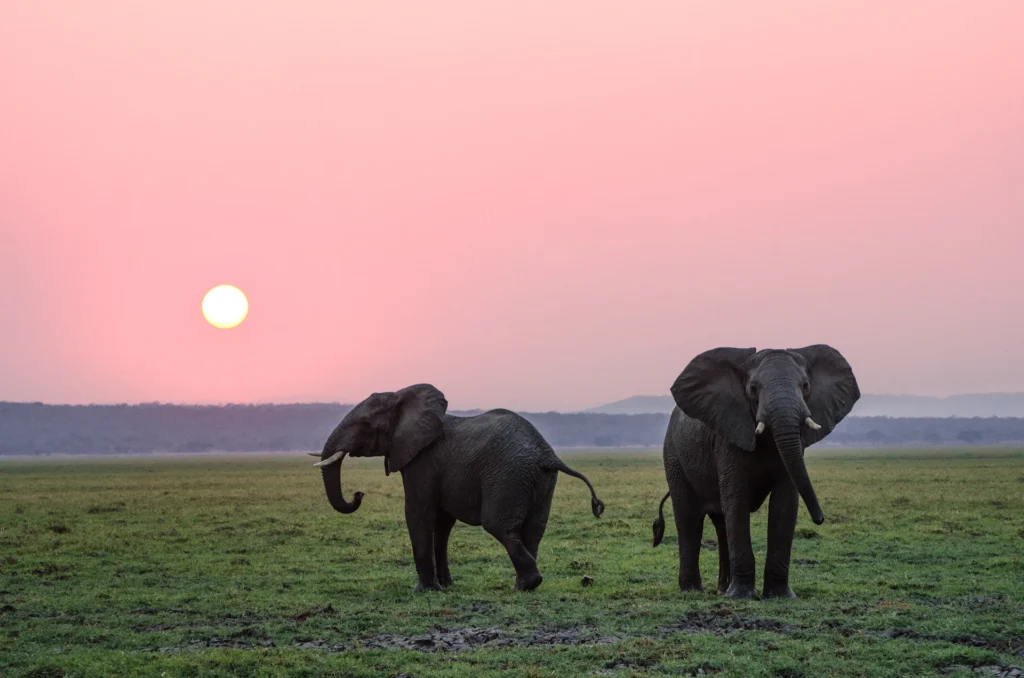
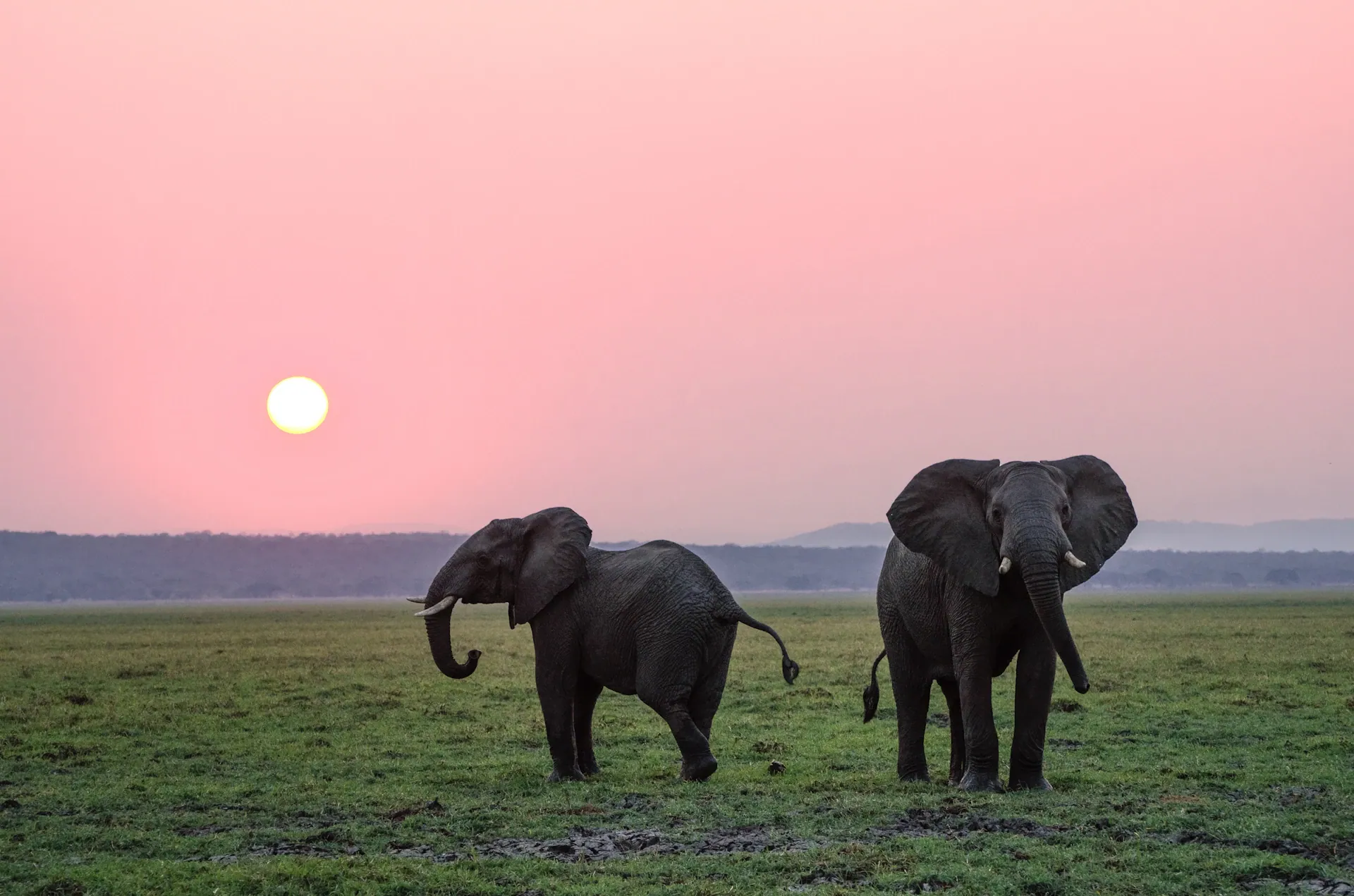
Tarangire National Park is known for its enormous baobab trees and the largest elephant herds in northern Tanzania. During the dry season from June to October, thousands of animals crowd on the banks of the Tarangire River, the only reliable water for miles, and the landscape is full of elephants, wildebeest, zebra, buffalo and eland.
The park is far less visited than the Serengeti or Ngorongoro, and the scenery is lovely, with rolling hills, baobab and acacia, termite mounds and seasonal swamps. Lions climb in the trees, leopards hide in the fig branches, and pythons coil in the baobabs. It is also an excellent place for birding, with more than 550 species recorded.
Tarangire is usually the first or last stop on a northern circuit, about two hours from Arusha.

Tarangire holds some of the highest elephant densities in Africa, with herds of up to several hundred in the dry season. Buffalo, wildebeest, zebra, giraffe, eland, hartebeest, waterbuck, impala and the rare fringe-eared oryx and lesser kudu live in the park. Lions, leopards and cheetah are present, and python and tree-climbing lions are a local specialty. Rhino and hippos are not found in the park.
Chance of seeing
Our estimate for a stay of two or three nights with a good guide. Wildlife is wild, so nothing is promised.
Giant baobabs stand on rolling hills above the Tarangire River, and the dry-season landscape turns a bright gold. Seasonal swamps, granite outcrops and termite mounds break up the horizon, and the sunsets are memorable.
Activities here
Tarangire is warm and dry for much of the year, with daytime temperatures of 26°C to 30°C and cooler nights. The long rains fall from March to May, and the short rains in November and December.
| Month | Day °C | Night °C | Rain mm |
|---|---|---|---|
| Jan | 28 | 17 | 90 |
| Feb | 29 | 17 | 90 |
| Mar | 28 | 17 | 130 |
| Apr | 27 | 17 | 190 |
| May | 27 | 16 | 60 |
| Jun | 26 | 14 | 5 |
| Jul | 26 | 13 | 3 |
| Aug | 27 | 14 | 4 |
| Sep | 29 | 15 | 7 |
| Oct | 30 | 17 | 30 |
| Nov | 29 | 17 | 110 |
| Dec | 28 | 17 | 110 |
Approximate long-term averages. Higher ground is cooler, and forests can rain in any month.
June to October is hot, dry and bright, and the animals gather along the river. This is the park’s peak season and the best time for elephants.
The rains turn the park green and the animals disperse across a wide area, so game viewing is slower. Birdlife is at its best, and the park is quiet and photogenic.
June to October is the best time, when wildlife concentrates at the river. The green season is excellent for birds and landscapes, with fewer visitors and lower rates.
Best time to visit Jun to Oct
Tarangire is about 120 kilometres from Arusha, a drive of two to two and a half hours. It lies on the road to Lake Manyara and Ngorongoro, and has airstrips for light aircraft.
Park fees are included in our safaris. Most visitors need a Tanzania visa, applied for online before travel or bought on arrival, and a passport valid for at least six months.
Tarangire is hot and dusty in the dry season, so bring sun protection and a scarf. Tsetse flies can be a nuisance in some areas. Please take advice on malaria before you travel.
National ParkSerengeti National ParkThe Great Migration14 safaris
Wildlife Reserve & SanctuaryNgorongoro Conservation AreaA day on the crater floor16 safarisOur take
“Our take”
Tarangire is the best first stop on the northern circuit, because the elephants are easy to find and the pace is gentle.
Safaris from
US$2,030 per person
Plan your time in Tarangire
Every safari we run is private and built around you. Tell us your dates and what you hope to see, and we will shape the route, the lodges and the permits.

Made to measure
Tell us how you like to travel and we will build a private journey around it: the right lodges, the right pace and the permits already in hand.
Start planningCookies
Essential cookies keep this site working. With your permission we also remember the safaris and places you have viewed. You can change your mind any time from Cookie settings in the footer.