Nyungwe is one of the oldest montane rainforests in Africa, spread across about 1,019 km² of steep ridges in Rwanda's south-west. It became a national park in 2004, and it protects the watershed that feeds both the Nile and the Congo. The forest is dense, tall and often wrapped in cloud, and a single road winds through it, so you drive for an hour or more with nothing but trees on either side.
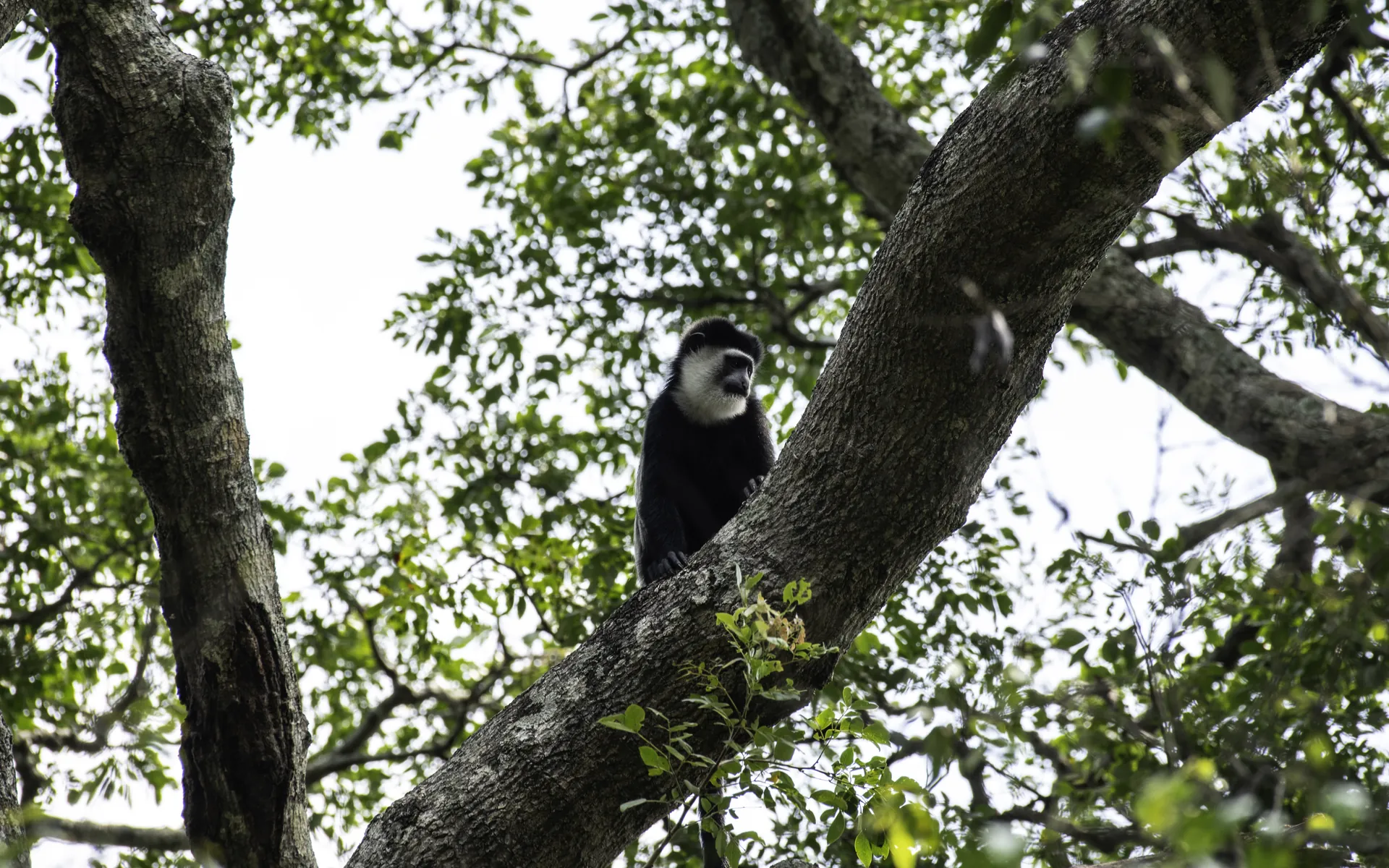
People come for the chimpanzees, which live in the main forest and in the small Cyamudongo forest nearby, but Nyungwe offers far more than one trek. There are 13 primate species, including Angola colobus in troops of several hundred, more than 300 bird species and a network of well-kept trails. The canopy walkway at Uwinka lets you walk above the treetops, and the Isumo waterfall trail drops through ferns to a cascade on the forest floor.
On the western edge, the Gisakura tea estates run in bright green lines up to the forest, and One&Only Nyungwe House sits among them, a quiet base for a few days of walking.

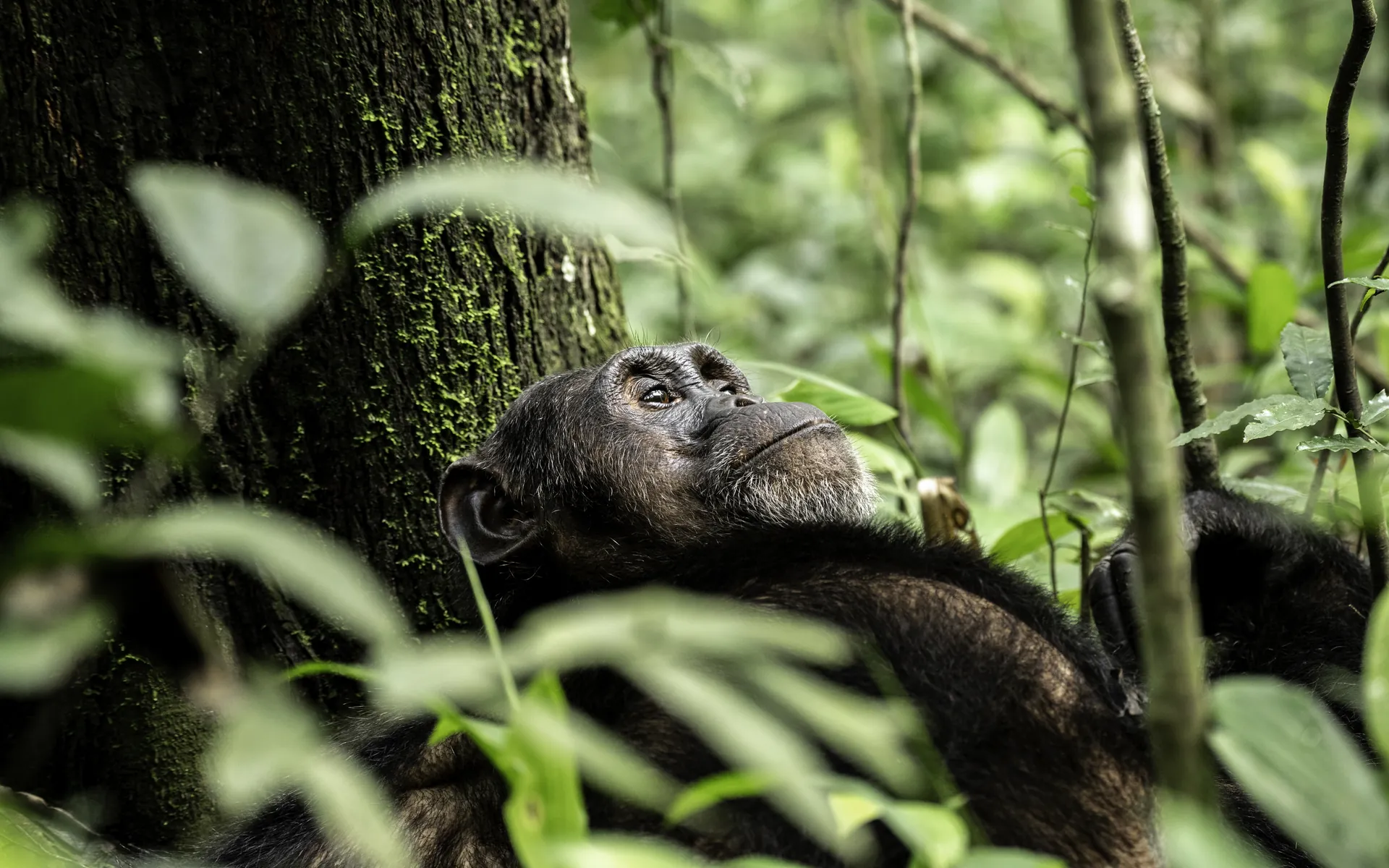
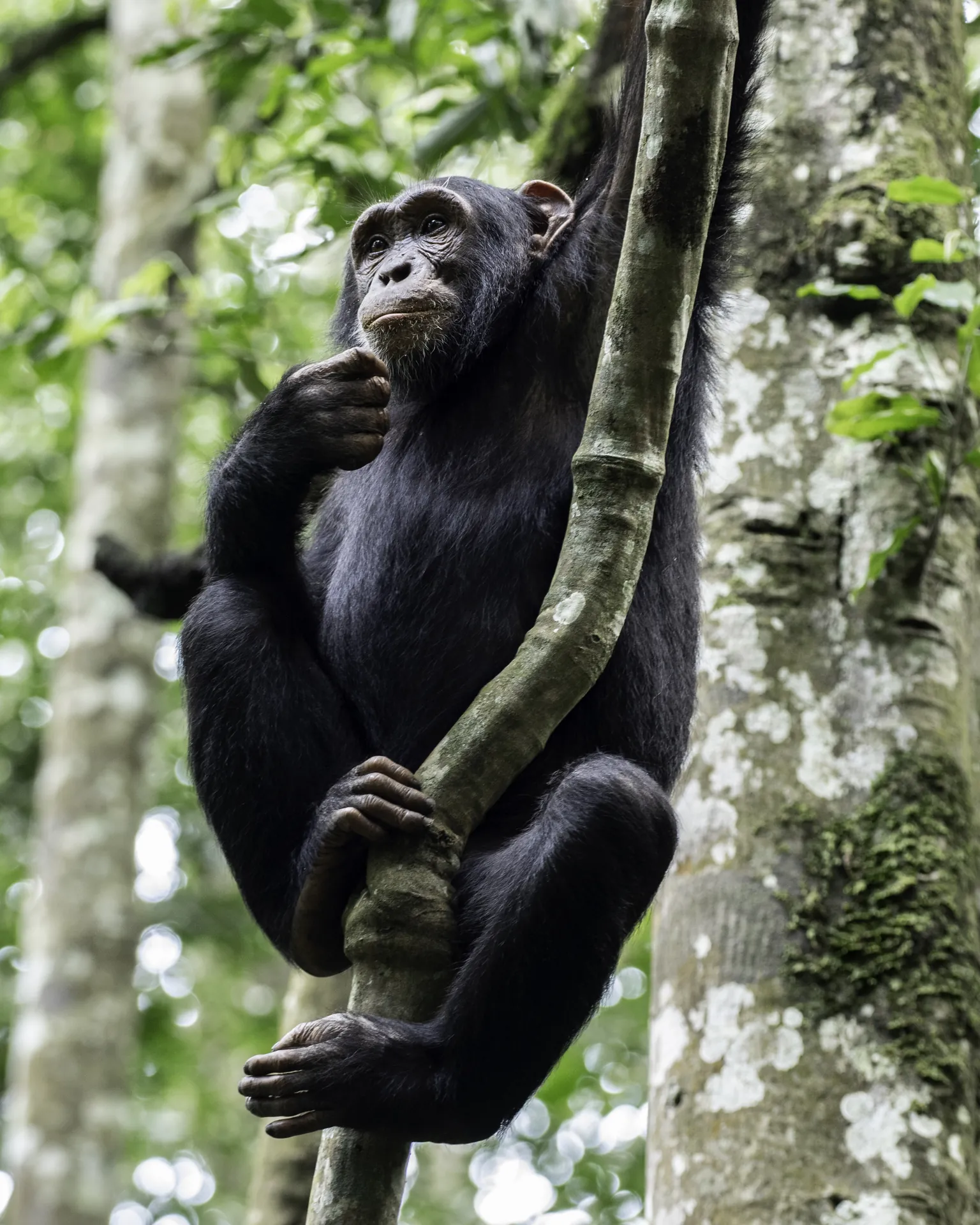
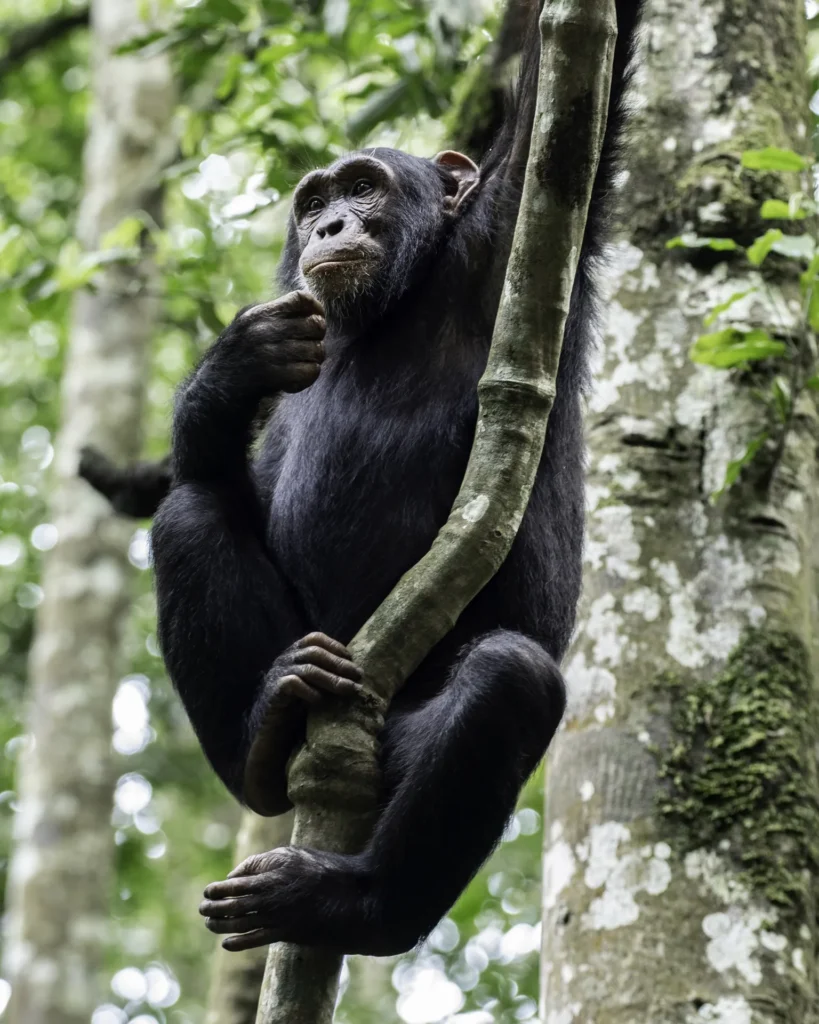
Chimpanzees are the main draw. A habituated community is tracked in the main forest, and a second lives in the Cyamudongo forest, a separate patch below the park. Chimps range widely and trekking can be demanding, but hearing a group calling across a valley before you see them is something few people forget. The Angola colobus here gather in troops of hundreds, among the largest primate groups in Africa. You may also see L’Hoest’s monkeys, grey-cheeked mangabeys, blue monkeys and silver monkeys.
More than 300 bird species have been recorded, including many Albertine Rift endemics such as the Rwenzori turaco, red-collared babbler and several sunbirds. The great blue turaco is common and easy to spot. Leopard, serval and golden cat live in the forest but are very rarely seen.
Chance of seeing
Our estimate for a stay of two or three nights with a good guide. Wildlife is wild, so nothing is promised.
Nyungwe is a sea of forested ridges and deep valleys, with mist rising from the trees in the morning. Giant tree ferns, mahogany and moss-covered trunks line the trails, and orchids grow on the branches. Towards the west the forest opens onto the neat green tea estates of Gisakura, and on clear days you can see down to Lake Kivu and across to the hills of Congo.
Activities here
Nyungwe is cool and wet. Days are usually 15 to 20°C and nights drop to around 10°C, sometimes lower at altitude. It receives around 2,000 mm of rain a year, falling mostly in the long rains from March to May and the short rains from October to November, but showers can come on any day. Good rain gear, layers and waterproof walking boots are essential.
| Month | Day °C | Night °C | Rain mm |
|---|---|---|---|
| Jan | 19 | 11 | 170 |
| Feb | 19 | 11 | 180 |
| Mar | 19 | 11 | 220 |
| Apr | 19 | 11 | 240 |
| May | 19 | 11 | 170 |
| Jun | 19 | 10 | 50 |
| Jul | 20 | 10 | 30 |
| Aug | 20 | 10 | 70 |
| Sep | 20 | 11 | 150 |
| Oct | 19 | 11 | 200 |
| Nov | 19 | 11 | 220 |
| Dec | 19 | 11 | 180 |
Approximate long-term averages. Higher ground is cooler, and forests can rain in any month.
The long dry season runs from June to September, with a shorter, less reliable dry spell from December to February. Rain eases rather than stops, mornings are often misty and clear later, and the trails are much easier underfoot. Days are around 18 to 20°C and nights around 10°C, so bring warm layers for early chimp treks.
The long rains fall from March to May, with April usually the wettest month, and the short rains from October to November. Nyungwe receives around 2,000 mm of rain a year and the wet months live up to it, with heavy showers, low cloud and slippery, steep trails. Chimps are often easier to find when the forest trees are fruiting, so the wet season has its rewards if you come prepared with waterproofs and boots with good grip.
The dry months, June to September and December to February, are the easiest time to trek, as the trails are less slippery. Chimps are often easier to find during the wet seasons, when fruit is plentiful, so the rainy months are well worth considering, especially if you do not mind a bit of mud. The forest is open all year.
Best time to visit Jan to Feb, Jun to Sep
The drive from Kigali to Nyungwe takes about 5 to 6 hours, passing through Nyanza and Huye, which make good stops along the way. Helicopter transfers take about 1 hour. There are also scheduled flights from Kigali to Kamembe, about 1 hour’s drive from Gisakura. Nyungwe also works well with Lake Kivu, a scenic drive along the lakeshore to Karongi or Rubavu.
Chimpanzee trekking, the canopy walkway and guided forest walks all need permits from the Rwanda Development Board. Chimp permits are limited to small groups each day and are worth booking well ahead in the dry seasons. Other activities are generally easier to arrange. We book all of them for you.
Chimp treks can be long and steep, sometimes starting before dawn and covering rough ground, so a good level of fitness helps. Trails can be very slippery after rain. Walking sticks are available, and our guides will choose the right activity for your pace.
National ParkVolcanoes National ParkMountain gorillas in the Virungas22 safaris
National ParkAkagera National ParkRwanda’s Big Five savannah12 safaris
National ParkGishwati-Mukura National ParkRwanda’s restored rainforest
Lake & IslandsLake KivuLakeshore rest between treks12 safaris
Lake & IslandsTwin Lakes Burera & RuhondoQuiet lakes below the volcanoes3 safarisOur take
“Give the forest time”
We rarely plan fewer than three nights in Nyungwe. Chimp trekking starts before dawn and can take you up and down steep ridges, so a quiet afternoon at the lodge afterwards is welcome, and the second day is ideal for the colobus, the waterfall trail or the canopy walkway. Our favourite moment is often the simplest: a walk at the edge of the tea estate in the late afternoon, when the colobus and blue monkeys come to feed in the trees along the boundary.
Safaris from
US$1,485 per person
Plan your time in Nyungwe
Every safari we run is private and built around you. Tell us your dates and what you hope to see, and we will shape the route, the lodges and the permits.

Made to measure
Tell us how you like to travel and we will build a private journey around it: the right lodges, the right pace and the permits already in hand.
Start planningCookies
Essential cookies keep this site working. With your permission we also remember the safaris and places you have viewed. You can change your mind any time from Cookie settings in the footer.