

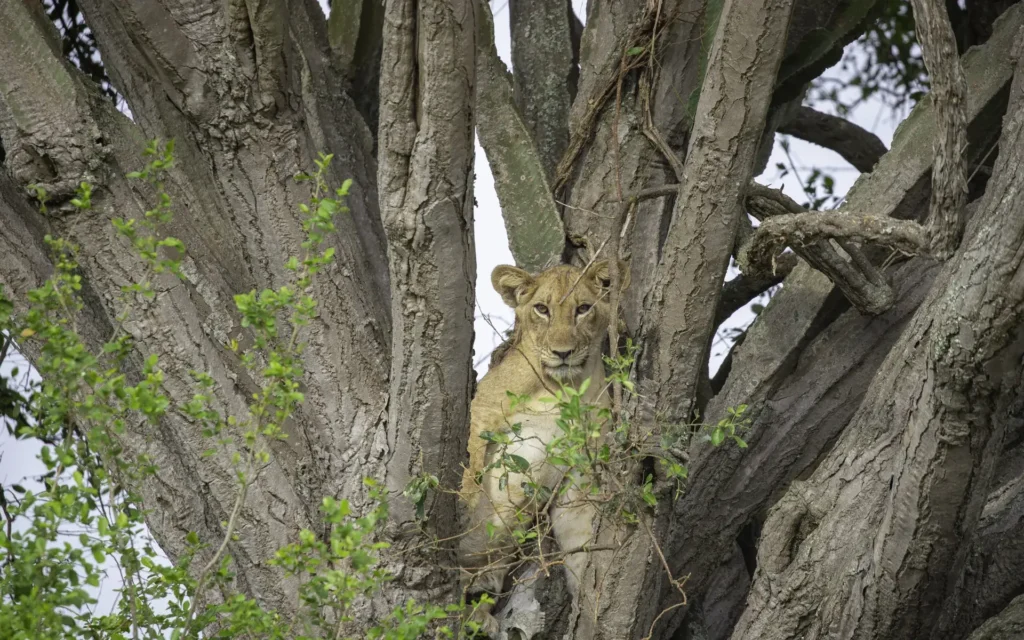
In the Ishasha sector of Queen Elizabeth National Park, lions do something most lions do not. They climb trees. Seeing it is one of the great surprises of a Uganda safari, and a little patience makes it much more likely.
Where Ishasha is
Ishasha lies in the far south of the park, on the border with the Democratic Republic of Congo. The landscape is open grassland broken by stands of old fig trees along the river. It is a long way from the busy Kazinga Channel, and that is part of its charm. You will often have the plains to yourself.
Why they climb
Nobody knows for certain. Guides will tell you the cats are escaping flies and the midday heat, getting a better view of prey or finding a cooler breeze. Whatever the reason, a lioness stretched along a fig branch with her legs hanging down is a sight you will remember.
How to find them
- Go early, from first light, and again in the late afternoon.
- Ask your guide to check the large fig trees along the river tracks first.
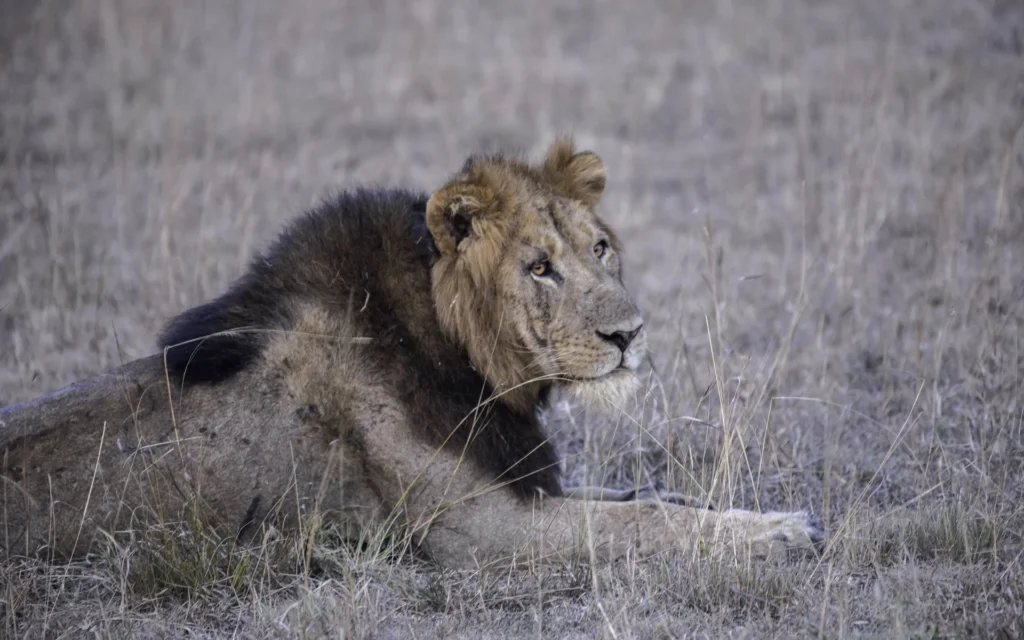
- Be patient. Sometimes the cats are on the ground in the long grass, and a short wait is often rewarded.
- Sightings are never guaranteed, which is exactly why Ishasha feels like a real safari.
Other wildlife
Ishasha also has topi, Uganda kob, buffalo, elephants and a hippo pool on the Ntungwe river. Birdlife is rich, and the open country makes game viewing relaxed and unhurried.

Where to stay
Ishasha Wilderness Camp sits on the river with the plains on its doorstep. Ishasha is also on the road between Queen Elizabeth and the southern sectors of Bwindi, so it fits neatly into a route from the savannah to the gorillas. One night is enough to break the drive, and two nights give you the time the lions deserve.
See Queen Elizabeth National Park, read how to trek gorillas in Bwindi next, or start planning.